

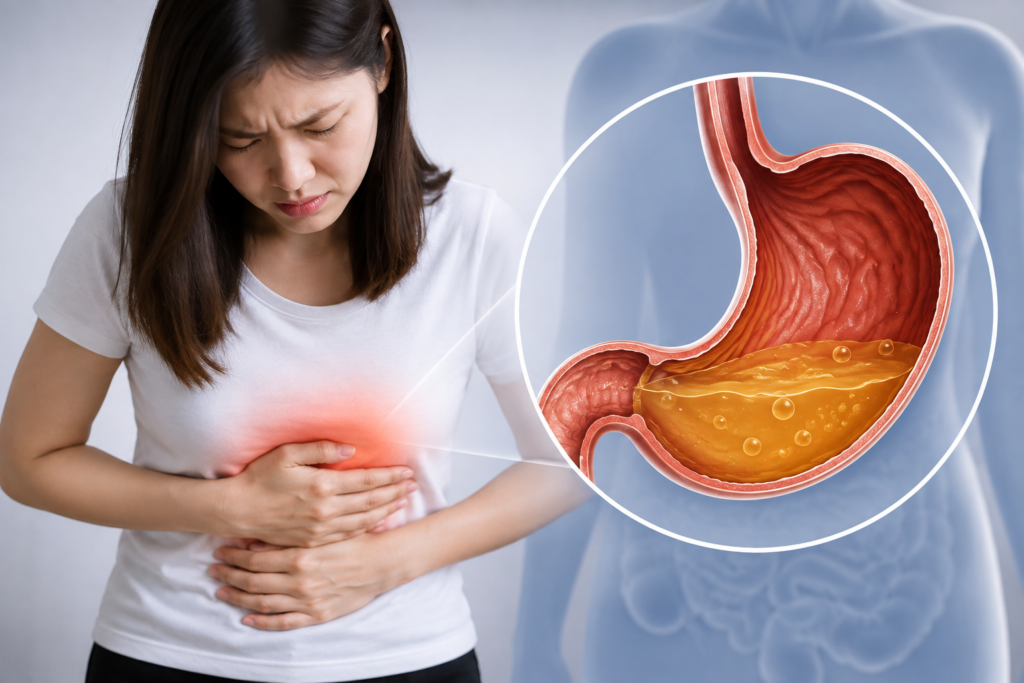
Many people in Malaysia simply call these symptoms “gastric”, but not every stomach discomfort is caused by the same condition.
Symptoms commonly described as “gastric” may be related to gastritis, acid reflux, Gastroesophageal Reflux Disease (GERD), indigestion, peptic ulcer disease, Helicobacter pylori (H. pylori) infection or other digestive conditions.
At MedUS Clinic Hutan Melintang, our doctors provide medical assessment and treatment for gastric symptoms, gastritis, acid reflux, GERD, stomach pain, heartburn, bloating and other common digestive problems.
Our clinic serves patients from Hutan Melintang, Bagan Datuk, Teluk Intan, Sungai Sumun, Simpang Empat, Langkap and surrounding areas.
Gastritis is inflammation of the lining of the stomach.
It may occur suddenly or develop gradually over time. Some people experience obvious symptoms, while others may have mild or no symptoms.
Common causes and factors associated with gastritis include:
The appropriate treatment depends on the underlying cause.
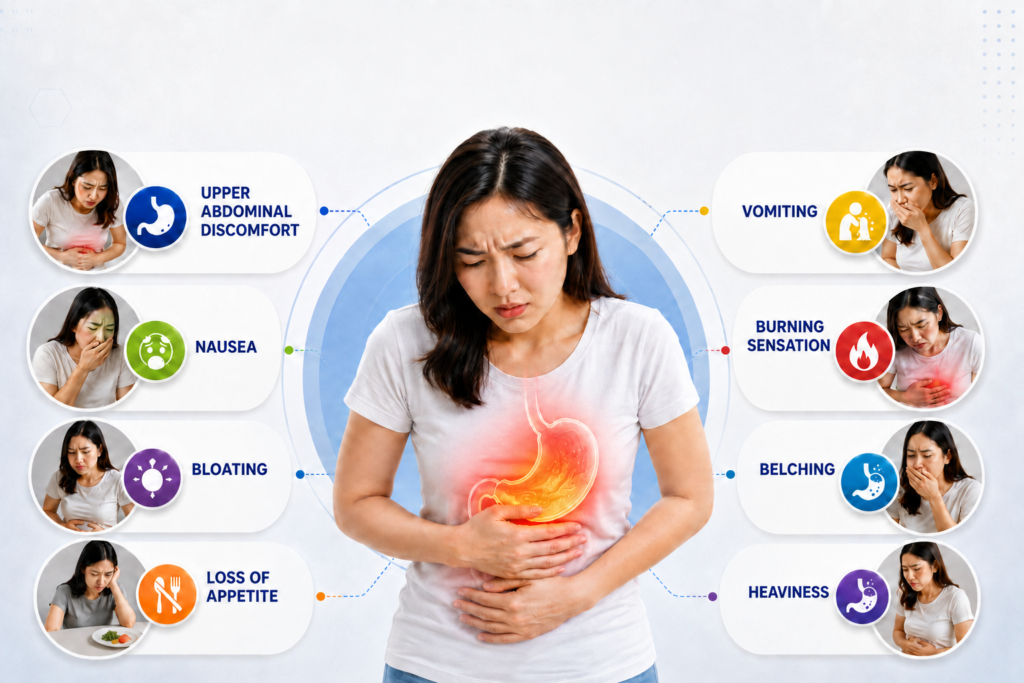
Symptoms of gastritis can vary from person to person.
Common symptoms may include:
Having these symptoms does not automatically mean you have gastritis, as several digestive conditions can cause similar symptoms.
Persistent or recurring stomach symptoms should be medically assessed.
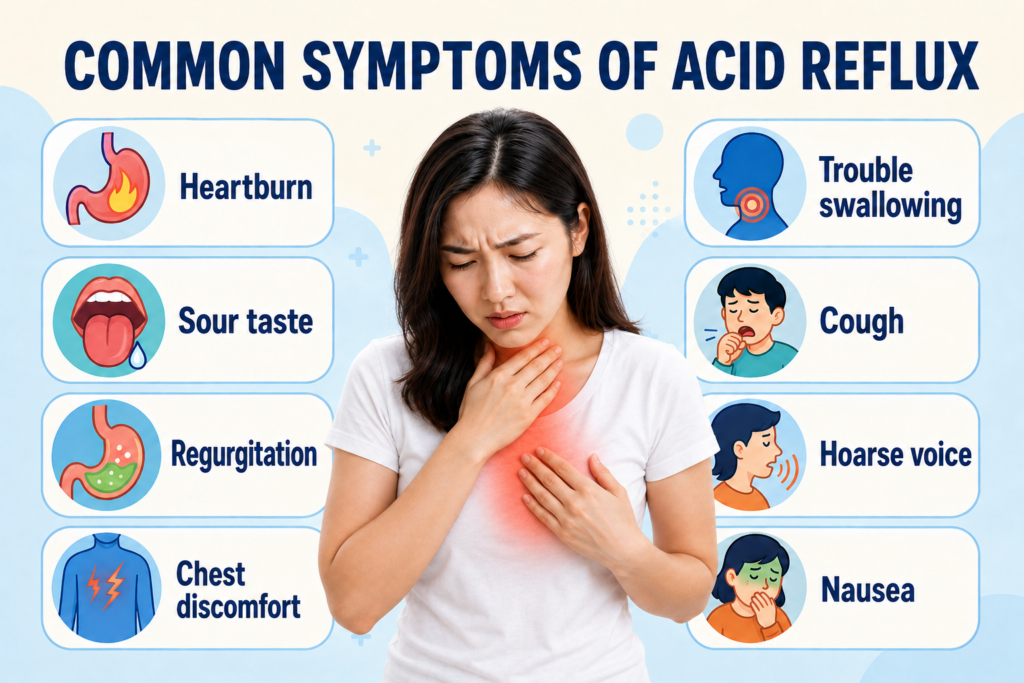
This can cause a burning sensation in the chest commonly known as heartburn.
Occasional acid reflux can happen to many people.
When acid reflux becomes frequent, persistent or causes troublesome symptoms or complications, it may be diagnosed as Gastroesophageal Reflux Disease (GERD).
Certain factors may trigger or worsen acid reflux, including:
Triggers can vary from one person to another.
Common acid reflux and GERD symptoms may include:
Not everyone with acid reflux experiences typical heartburn.
Some people may mainly experience throat symptoms, coughing or discomfort after meals.
Many patients use the word “gastric” to describe both conditions, but gastritis and acid reflux are not the same.
Gastritis involves inflammation of the stomach lining.
Acid reflux occurs when stomach contents flow backwards into the oesophagus.
Gastritis May Cause:
Acid Reflux May Cause:
It is possible for someone to experience gastritis and acid reflux at the same time.
A medical assessment can help determine the likely cause of your symptoms and whether further investigation is required.
Occasional mild digestive discomfort may improve, but you should consider seeing a doctor if your gastric, stomach pain or acid reflux symptoms are frequent, persistent, recurrent or affecting your daily life.
Seek medical attention promptly if you experience:
Do not automatically assume chest pain is caused by gastric or acid reflux.
Heart, lung, muscle and other medical conditions can sometimes cause similar symptoms. New, severe or concerning chest pain requires appropriate medical assessment.
Helicobacter pylori (H. pylori) is a type of bacteria that can infect the stomach.
Some people with H. pylori infection may have no symptoms, while others may experience:
Depending on your symptoms and medical history, your doctor may recommend an H. pylori test.
Testing options may include methods such as the Urea Breath Test (UBT) or other appropriate investigations.
Certain medications, including some acid-suppressing medicines and antibiotics, can affect H. pylori test results.
Therefore, always inform your doctor about medications you are currently taking before undergoing an H. pylori test.
If H. pylori infection is confirmed, appropriate treatment can be prescribed based on the clinical assessment.
There is no single treatment that is suitable for every patient with “gastric.”
Treatment depends on the underlying cause, severity and frequency of symptoms, medical history and examination findings.
Treatment may include:
Repeatedly taking “gastric medicine” without understanding the cause may not be appropriate for persistent or recurring symptoms.
A medical assessment can help determine the likely cause and appropriate treatment.
Lifestyle changes may help reduce symptoms for some people.
You can consider:
There is no single “gastric diet” suitable for everyone.
Some people notice symptoms after consuming spicy foods, fatty meals, coffee, caffeine, acidic foods or certain other foods, while others do not.
Instead of unnecessarily avoiding many foods, identify which foods consistently trigger your own symptoms.
At MedUS Clinic Hutan Melintang, our doctors provide medical assessment and treatment for common gastrointestinal and abdominal symptoms, including:
Our doctors can assess your symptoms and determine whether medication, further investigation or referral is required.
Medical & Diagnostic Services Under One Roof
Depending on your symptoms and clinical assessment, patients can also access other services at MedUS Clinic, including:
This allows patients to access medical assessment and selected diagnostic services conveniently at one location.
Convenient Location in Hutan Melintang
MedUS Clinic is conveniently located for patients from:
If you are looking for gastric treatment in Hutan Melintang, acid reflux treatment, GERD treatment, stomach pain treatment or H. pylori assessment, you can visit MedUS Clinic for medical assessment.
No.
Food triggers vary from person to person.
Some people notice worsening symptoms after:
However, these foods do not trigger symptoms in everyone.
It is usually more practical to identify foods that consistently worsen your own symptoms rather than unnecessarily avoiding many different foods.
Yes.
Gastritis affects the stomach lining, while acid reflux involves stomach contents flowing backwards into the oesophagus.
Because they are different processes, a person may experience gastritis and acid reflux at the same time.
Yes.
A Urea Breath Test (UBT) is a non-invasive test that can be used to detect active H. pylori infection.
Certain medications can affect the accuracy of the test, so you should inform your doctor about any antibiotics, acid-suppressing medications or other medicines you are currently taking before testing.
No.
Acid reflux can cause a burning sensation or discomfort in the chest, but chest pain may also originate from the heart, lungs, muscles or other medical conditions.
New, severe or concerning chest pain should be medically assessed rather than assumed to be “gastric.”
Seek medical attention if stomach or abdominal pain is severe, persistent or accompanied by warning symptoms such as:
These symptoms may require further investigation.
Ramai orang menggunakan perkataan “gastrik” apabila mengalami sakit perut, pedih ulu hati, perut kembung, kerap sendawa atau rasa tidak selesa selepas makan, tetapi simptom ini sebenarnya boleh berpunca daripada gastritis, acid reflux, GERD, indigestion, ulser perut atau jangkitan H. pylori. Jika simptom berlaku dengan kerap, berpanjangan atau semakin teruk, pemeriksaan doktor dapat membantu mengenal pasti punca dan menentukan rawatan yang sesuai. MedUS Clinic Hutan Melintang menyediakan pemeriksaan dan rawatan gastrik, acid reflux, GERD, sakit perut, pedih ulu hati serta penilaian H. pylori untuk pesakit dari Hutan Melintang, Bagan Datuk, Teluk Intan, Sungai Sumun, Simpang Empat, Langkap dan kawasan berhampiran. Jika anda mencari klinik gastrik Hutan Melintang, rawatan gastrik, rawatan acid reflux, rawatan GERD atau H. pylori test Hutan Melintang, anda boleh mendapatkan pemeriksaan di MedUS Clinic. Jangan anggap sakit perut yang kerap sebagai “gastrik biasa” — kenal pasti puncanya supaya rawatan yang sesuai dapat diberikan.
Medus Clinic Hutan Melintang Tweet

MedUs Clinic delivers expert urgent care and
comprehensive medical services with
compassion and advanced facilities in Perak.
Copyright © 2024 by GLMED GROUP SDN. BHD. – Powered by UX Workstation