
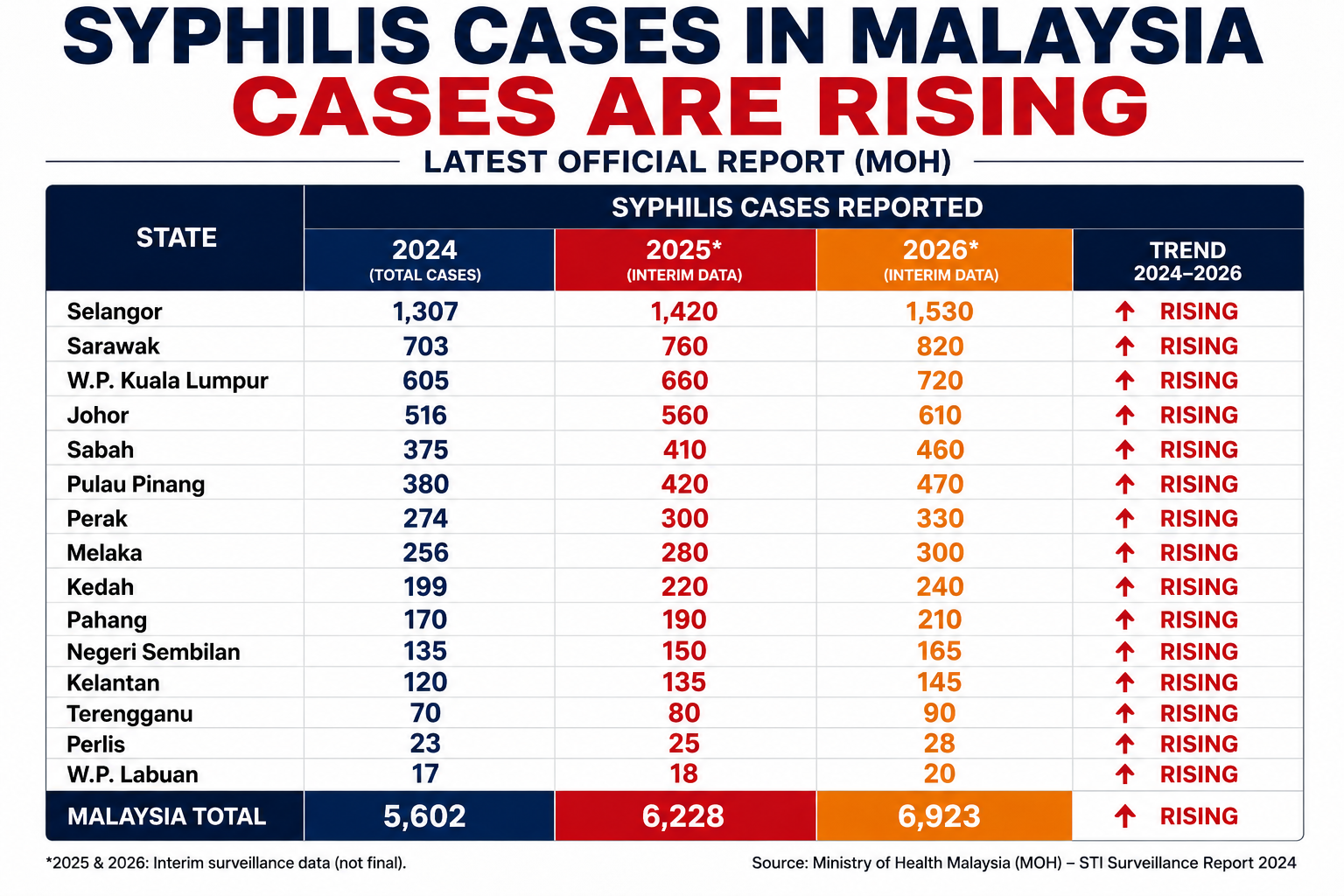
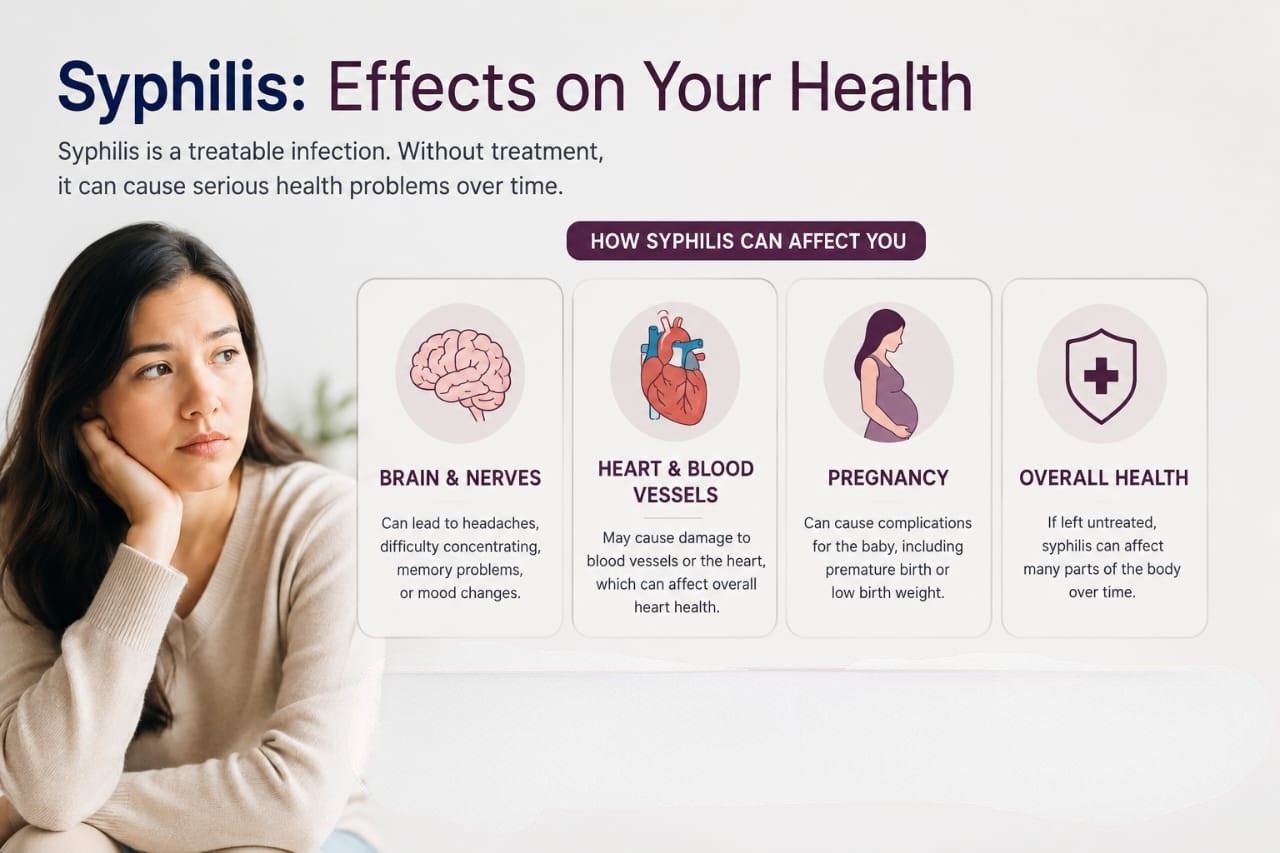
Sexually transmitted infections (STIs) remain an important public health concern worldwide, and syphilis is one of the infections experiencing a notable increase in reported cases. Although syphilis is highly treatable, many people delay testing because symptoms can be mild, mistaken for other conditions, or may not appear at all.
The reality is that syphilis can affect anyone who is sexually active. When left untreated, it can lead to serious complications involving the brain, heart, nerves, and other organs.
Understanding the symptoms, risk factors, and importance of early screening can help protect both your health and the health of your partner.
Syphilis is a sexually transmitted infection caused by the bacterium Treponema pallidum.
The infection is commonly spread through:
Many people mistakenly believe syphilis is a disease of the past. However, healthcare professionals continue to diagnose new cases worldwide every year.
The good news is that syphilis can usually be cured with appropriate antibiotic treatment, especially when detected early.
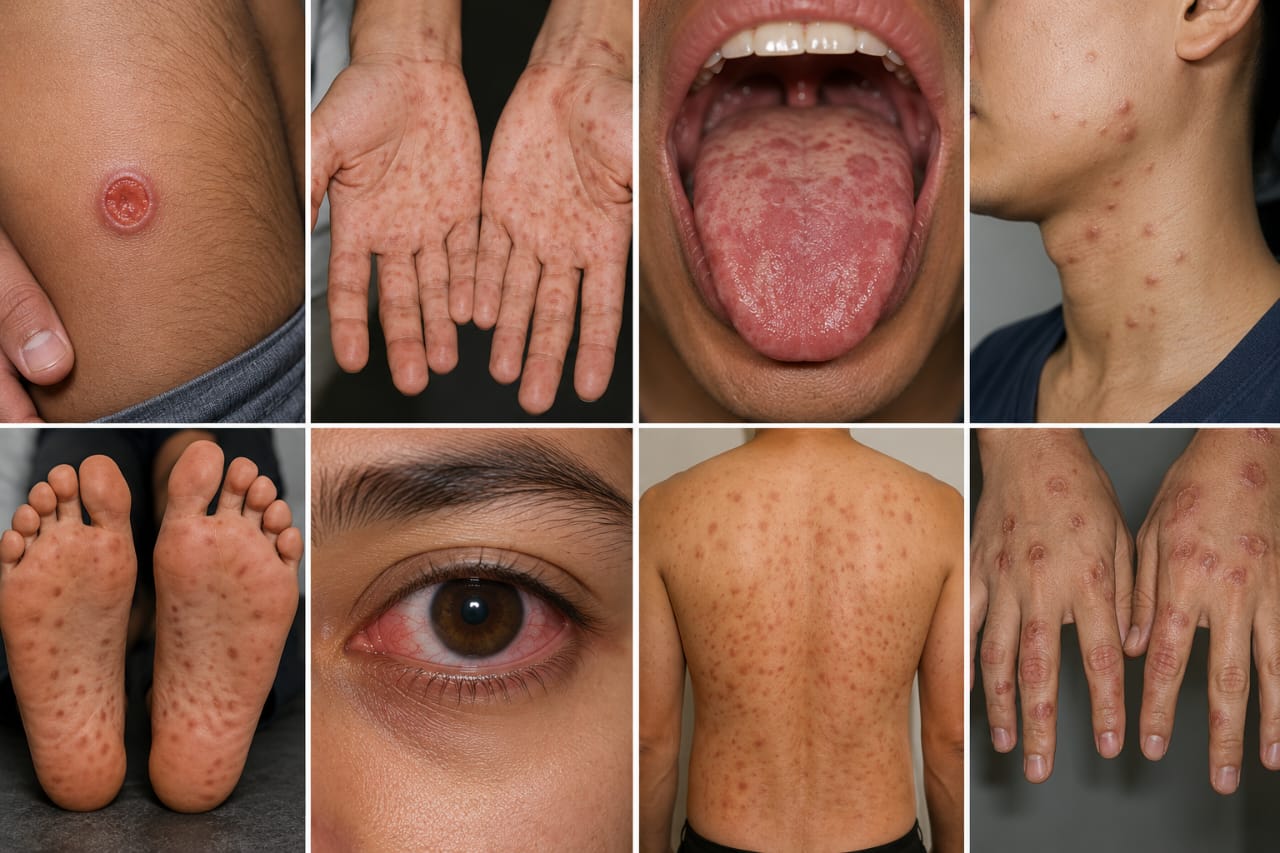
The first sign of syphilis is usually a painless sore (chancre) at the site where the bacteria entered the body.
Common locations include:
Penis
Vagina
Cervix
Anus
Rectum
Lips
Mouth
Tongue
The sore typically appears 10–90 days after exposure and usually heals on its own within a few weeks. However, the infection remains in the body if left untreated.
If untreated, the infection may progress to secondary syphilis.
Symptoms may include:
Skin rash
Fever
Sore throat
Fatigue
Swollen lymph nodes
Muscle aches
Headaches
Patchy hair loss
A characteristic feature is a rash that may appear on the palms of the hands and soles of the feet.
Symptoms may resolve without treatment, but the infection remains present.
Latent syphilis is a stage where there are no visible symptoms.
Although the person feels well, the bacteria remain in the body and can still be detected through blood tests.
Latent syphilis is divided into:
Early latent syphilis (infection acquired within the past year)
Late latent syphilis (infection present for more than one year or of unknown duration)
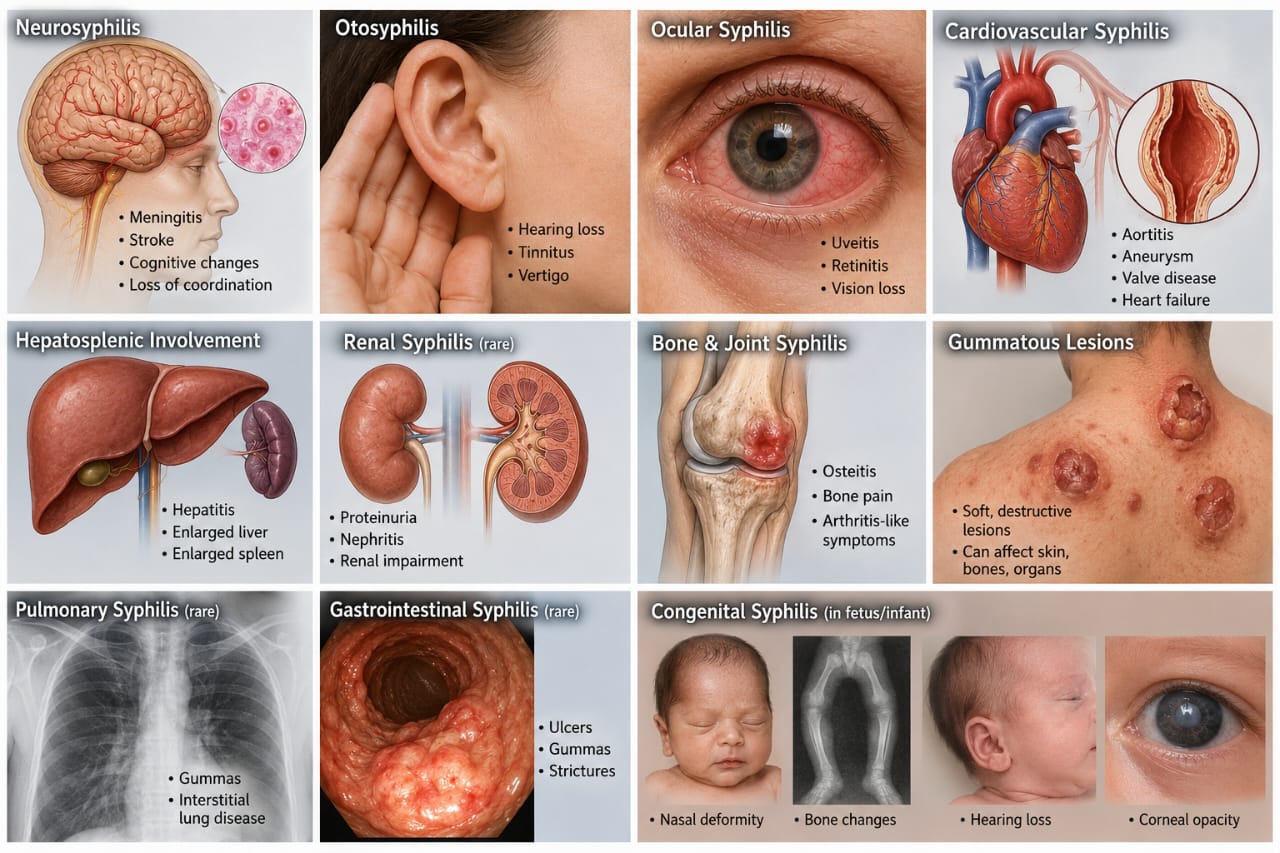
Tertiary syphilis may develop years after the initial infection if treatment is not received.
Potential complications include:
Brain and nervous system damage (neurosyphilis)
Vision problems or blindness (ocular syphilis)
Hearing loss (otosyphilis)
Heart and blood vessel disease
Memory and cognitive difficulties
Stroke-like symptoms
Some of these complications can be permanent and life-threatening.
Yes.
Many people with syphilis do not experience symptoms, especially during the latent stage.
This means an infected individual may unknowingly transmit the infection to their partner.
Regular STI screening remains the most reliable way to detect syphilis early.
You should consider a syphilis test if:
✅ You have a new sexual partner
✅ You have multiple sexual partners
✅ You had unprotected sex
✅ Your partner has been diagnosed with an STI
✅ You notice unusual sores, rashes, or other symptoms
✅ You are pregnant
✅ You simply want reassurance about your sexual health
Testing is confidential and often involves a simple blood test.
Syphilis can usually be treated effectively with antibiotics prescribed by a healthcare professional.
The type and duration of treatment depend on the stage of infection.
Most importantly, early treatment can cure the infection and help prevent long-term complications.
However, treatment cannot reverse damage that has already occurred in advanced stages of the disease.
This is why early screening remains essential.
🔹 Practice Safer Sex
Use condoms correctly and consistently during sexual activity.
🔹 Get Regular STI Screening
Routine screening can detect infections early, even when symptoms are absent.
🔹 Communicate With Your Partner
Open and honest discussions about sexual health can help reduce the risk of transmission.
🔹 Seek Medical Advice Promptly
Do not ignore symptoms such as sores, rashes, unusual discharge, or persistent discomfort. Early diagnosis and treatment can help prevent complications.
At MedUS Clinic, we understand that discussing sexual health concerns may feel uncomfortable for some individuals. Our healthcare team is committed to providing confidential, professional, and patient-centred care in a safe and respectful environment.
We believe that education, prevention, and early detection play a vital role in maintaining good health.
Our clinic provides:
Confidential STI screening
Syphilis blood testing
Medical consultations for STI-related symptoms
Sexual health education and counselling
Treatment and follow-up care where appropriate
General health screening services
Pre-employment and occupational health services
Vaccination and preventive healthcare services
Many sexually transmitted infections do not cause obvious symptoms during the early stages.
Regular screening may help:
✅ Detect infections before complications develop
✅ Reduce the risk of unknowingly transmitting infections to partners
✅ Provide reassurance and peace of mind
✅ Allow timely treatment when needed
✅ Support better long-term health outcomes
Our Commitment to Patient Care
At MedUS Clinic, patient confidentiality remains a priority.
Whether you are experiencing symptoms, have concerns after unprotected sexual contact, or simply wish to undergo routine screening, our healthcare team is here to support you with evidence-based medical advice and appropriate care.
Sifilis ialah penyakit kelamin (jangkitan seksual / STI / STD) yang semakin meningkat dan boleh menjejaskan kesihatan jika tidak dirawat. Ramai pesakit mencari maklumat menggunakan kata kunci seperti sifilis, penyakit kelamin, jangkitan seksual, STI, STD, ujian sifilis, saringan STD, pemeriksaan penyakit kelamin, rawatan sifilis, klinik STI dekat saya, klinik STD Hutan Melintang, serta ujian penyakit kelamin selepas seks tanpa perlindungan. Pada peringkat awal, sifilis mungkin tidak menunjukkan gejala jelas, menyebabkan ramai tidak sedar mereka telah dijangkiti. Antara tanda yang perlu diberi perhatian termasuk luka tidak sakit pada kemaluan (zakar atau faraj), ulser pada mulut atau dubur, ruam pada tapak tangan dan tapak kaki, bengkak kelenjar limfa, demam, dan keletihan. Jika anda mengalami simptom ini atau bimbang selepas terdedah kepada risiko, dapatkan pemeriksaan STI, ujian STD, atau ujian sifilis di klinik berhampiran secepat mungkin. Pengesanan awal dan rawatan segera sifilis adalah penting untuk mencegah komplikasi serius serta mengurangkan penularan kepada pasangan.
MedUS Clinic Hutan Melintang Health News

MedUs Clinic delivers expert urgent care and
comprehensive medical services with
compassion and advanced facilities in Perak.
Copyright © 2024 by GLMED GROUP SDN. BHD. – Powered by UX Workstation